Everyday Strength: 7 Simple Exercises for Strength and Balance
Building strength helps your body cope with everyday demands – sitting, standing, lifting, carrying, pushing and pulling.
Key Movements to Support Your Health
- Push movements – using your arms and upper body to push something away
- Pull movements – drawing something towards you, important for posture
- Standing / squat movements – getting up and down
- Hinge movements – bending at the hips to lift safely
- Core stability – supporting and controlling movement
- Leg strength & balance – how we walk, climb stairs and move confidently
- Carrying & holding – real-life strength for everyday loads
A Simple Everyday Strength Routine
If you would like to try these movements together, here is a simple routine you can do at home or in the workplace.
The Routine
- Chair squats – 6 to 10 repetitions
- Wall push-ups – 6 to 10 repetitions
- Resistance band rows – 6 to 10 repetitions
- Elevated plank – hold for 10 to 20 seconds
- Step-ups – 6 to 10 repetitions on each leg
- Farmer’s carry – walk for 20 to 30 seconds
Take a short break between exercises. Once you have completed them all, rest for a minute or two and repeat the routine once or twice if it feels comfortable. Try doing this routine two or three times per week. Focus on steady, controlled movements and building the habit of moving well.
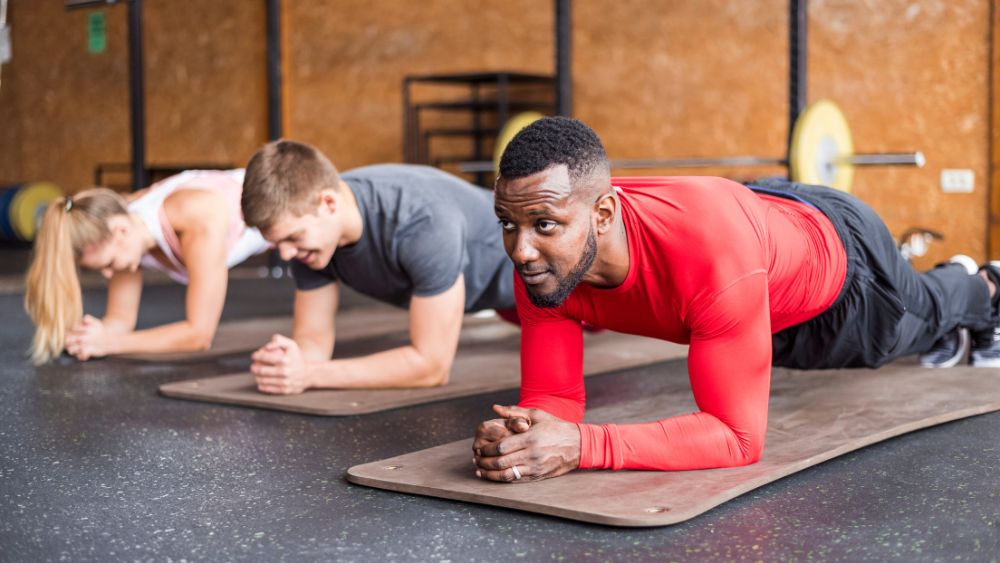
Push Movements: The Push-Up
Push movements help build strength in your chest, shoulders, arms and core. They’re useful for everyday tasks like pushing doors, getting up from the floor, or supporting your bodyweight.
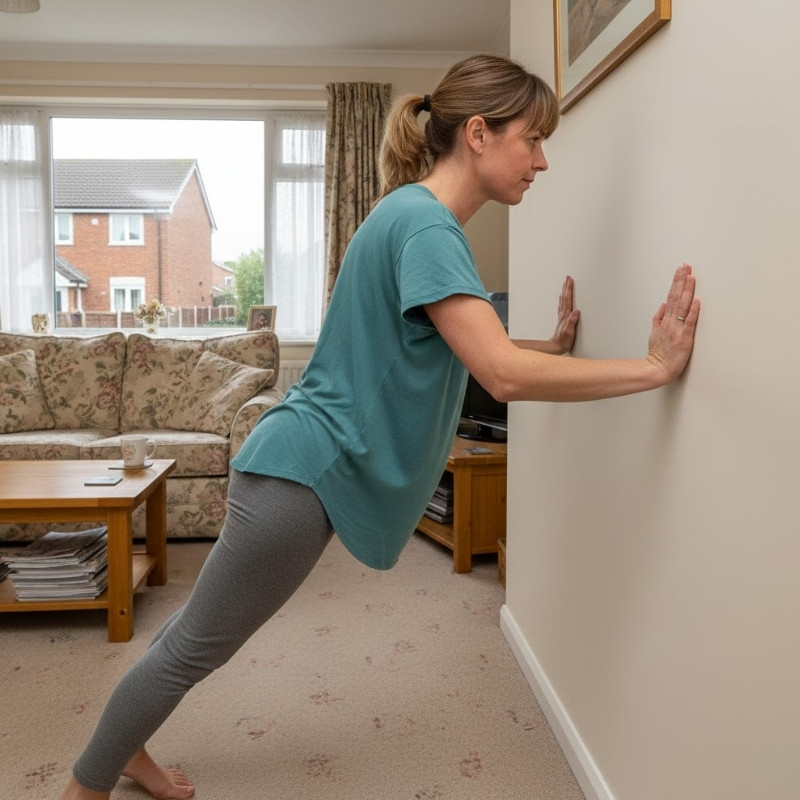
A push-up doesn’t have to be done on the floor to be effective. Try this:
- Stand facing a wall
- Place your hands on the wall at chest height
- Bend your elbows to bring your chest towards the wall
- Push back to standing
That’s a push-up. If you want a little more challenge, you can move to a kitchen counter, chair or the floor – but every version counts. The goal isn’t to make this hard, it’s to practise the movement and build strength over time.
You don’t need a high number of repetitions for this to be worthwhile. A good starting point is 6 to 10 controlled repetitions, take a break and then repeat.
Pull Movements: The Resistance Band Row
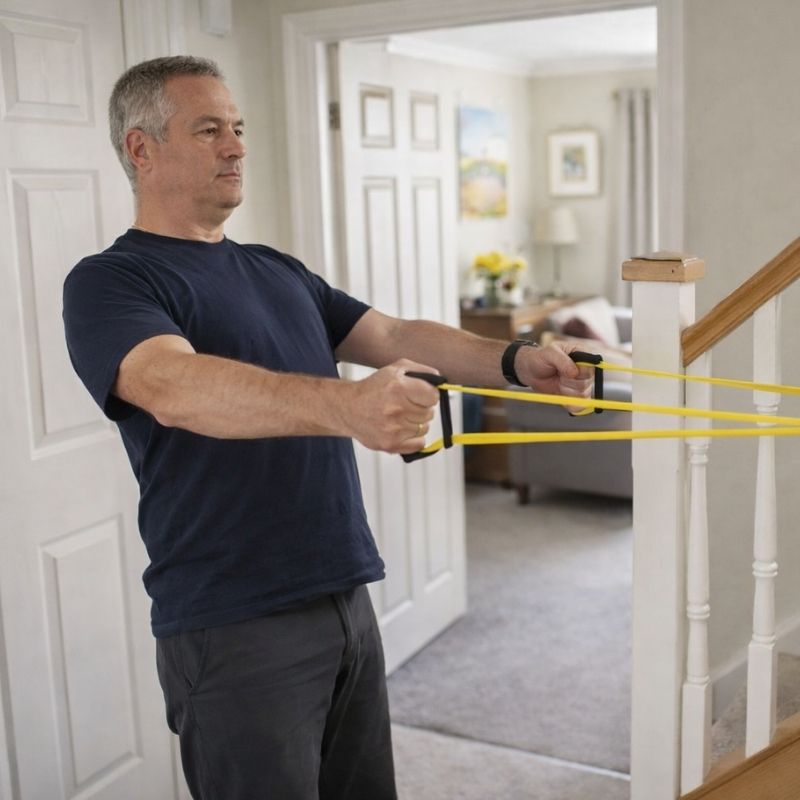
Pull movements help build strength in your upper back, shoulders and arms. They’re especially important for posture and shoulder health, and for balancing out all the time many of us spend sitting. We use pull movements more than we realise – pulling doors towards us, lifting objects closer to the body, or simply sitting upright instead of slouching. A pull exercise doesn’t need a gym or heavy weights to be effective. Try this standing band row:
- Stand tall
- Loop the resistance band around a solid anchor point at chest height (e.g. door anchor or railing)
- Hold the band with both hands
- Pull towards your chest, squeezing your shoulder blades
- Return slowly
That’s a pull movement. Alternatively you could sit on the floor with your legs stretched in front of you and put the band around your feet for a seated band row. If you don’t have a band, you can even practise the movement by pulling your elbows back and focusing on posture and control.
You don’t need a high number of repetitions for this to be worthwhile. A good starting point is 6 to 10 controlled repetitions, take a short break, and then repeat.
Standing & Squat Movements: The Chair Squat
Standing and squat movements help build strength in your legs and hips. They’re essential for everyday tasks like sitting down, standing up, climbing stairs and moving confidently through the day.
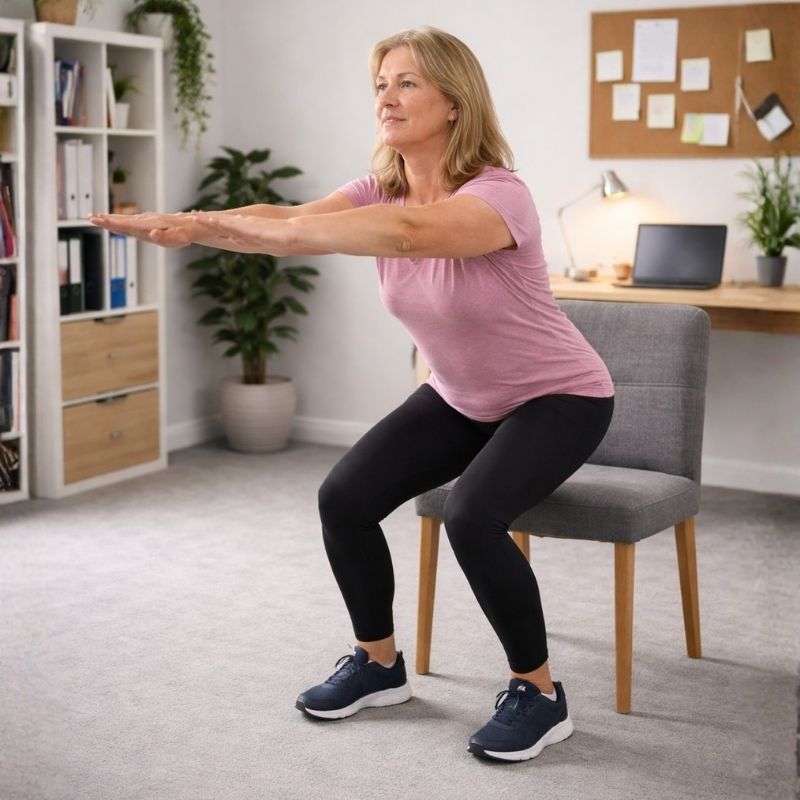
This is one of the most important movement patterns for long-term health and independence – and it’s something we already practise many times a day. You don’t need weights or a gym to benefit from this movement. Try this:
- Sit on a chair with your feet flat on the floor
- Stand up by pushing through your feet
- Pause briefly at the top
- Slowly lower yourself back down to the chair
That’s a squat. Using a chair helps keep the movement controlled and accessible. As you build confidence, you can use a lower seat, slow the movement down or do it without the chair – but every version counts.
You don’t need a high number for this to be worthwhile. A good starting point is 6 to 10 controlled repetitions, take a short break, and then repeat.
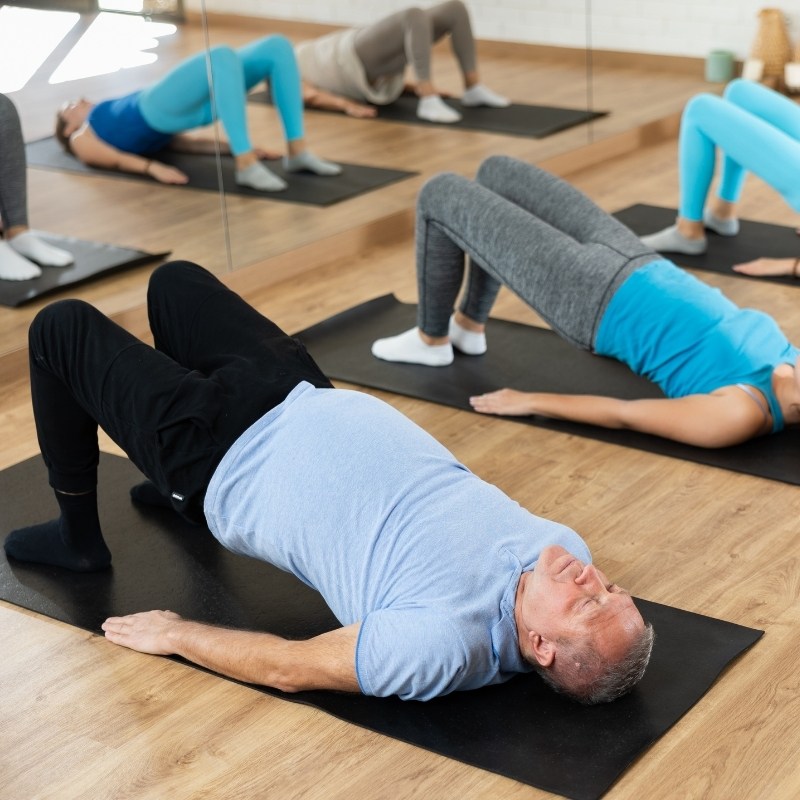
Hinge Movements: The Glute Bridge
Hinge movements help build strength in your hips, glutes and lower back. A hinge is about learning to move from your hips rather than your lower back. This is a key movement for long-term back health and confidence with lifting.
You don’t need weights or a gym for this to be effective. Try this:
- Lie on your back with your knees bent and feet flat on the floor
- Place your arms by your sides
- Push through your feet and lift your hips towards the ceiling
- Pause briefly at the top
- Slowly lower your hips back down
That’s a hinge movement. The glute bridge is a great way to practise this pattern in a supported, controlled position. As you build confidence, you can slow the movement down or hold the top position a little longer – but every version counts.
You don’t need a high number of repetitions for this to be worthwhile. A good starting point is 6 to 10 controlled repetitions, take a short break, and then repeat.
Core Stability: The Plank
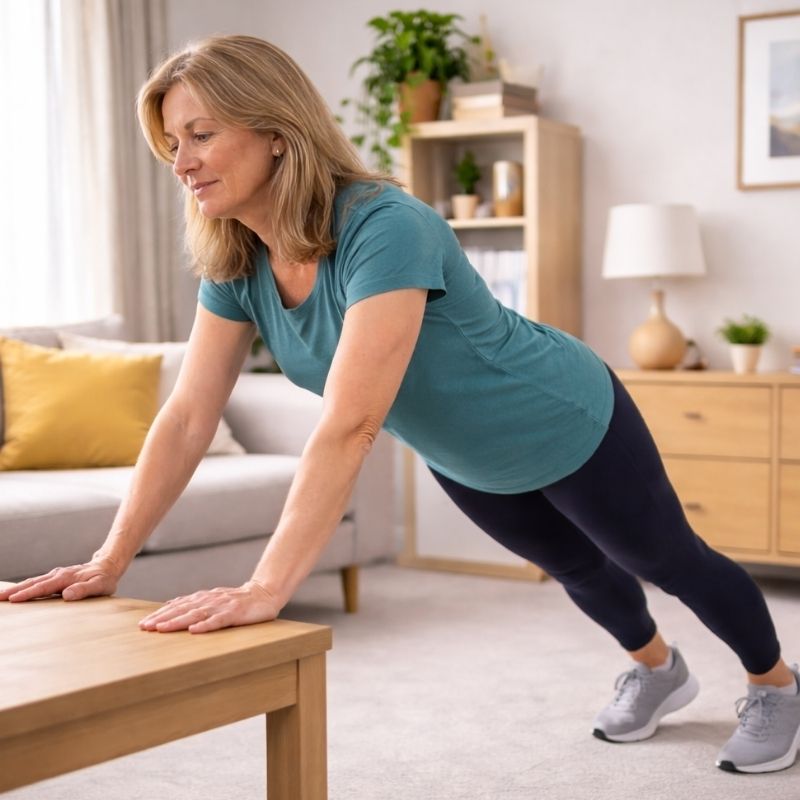
Core stability helps you stay steady and supported during everyday movement. It plays a role in how comfortably you stand, walk, lift, carry and even sit at your desk. This isn’t about getting a six-pack. It’s about helping your body feel stronger and more controlled as you move through the day.
A plank doesn’t have to be done on the floor to be effective. Try this:
-
Place your hands on a sturdy bench, table or kitchen counter
-
Step your feet back so your body forms a straight line
-
Keep your shoulders over your hands
-
Gently brace your stomach muscles
-
Hold the position while breathing steadily
That’s a plank. If you want more challenge over time, you can lower your hands to a lower surface or even the floor – but every version counts. You don’t need to hold this for long to benefit. A good starting point is 10 to 20 seconds, take a short break, and then repeat once or twice.
Leg Strength: The Step-Up
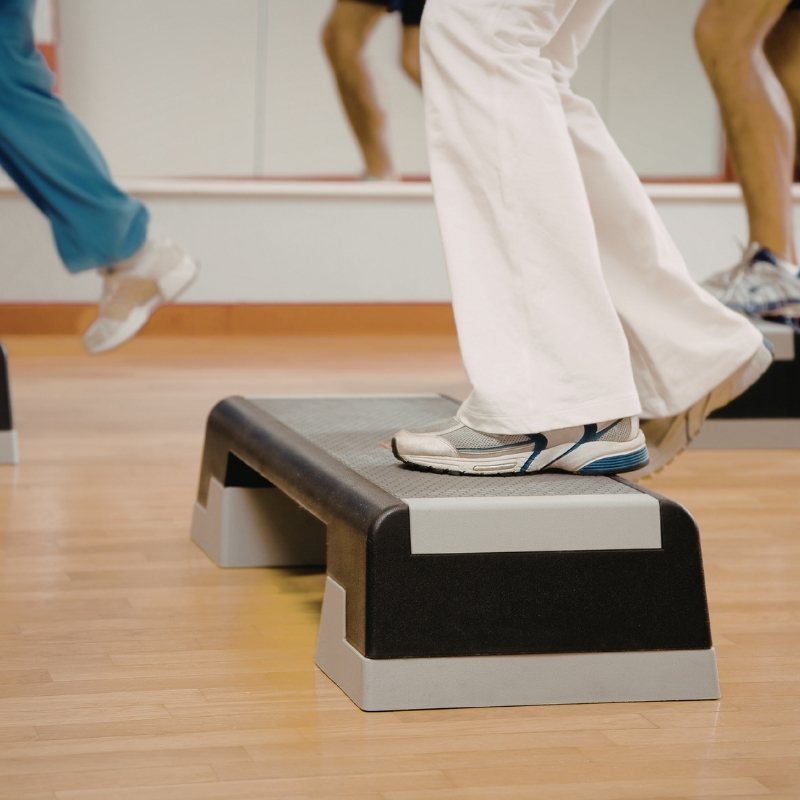
Single-leg movements help build strength, balance and coordination. Many everyday activities happen one leg at a time - walking, climbing stairs, stepping off kerbs or moving on uneven ground.
Training one leg at a time helps improve stability and confidence, and can support joint health as we age. You don’t need special equipment or a gym for this to be effective. Try this:
- Stand facing a step, sturdy box or bottom stair
- Place one foot fully on the step
- Push through that foot to stand up tall
- Step back down with control
- Repeat on the same side before switching
That’s a step-up. Start with a low step and focus on steady, controlled movement. As you build confidence, you can increase the height slightly - but every version counts. You don’t need a high number of repetitions for this to be worthwhile. A good starting point is 6 to 10 controlled repetitions on each leg, take a short break, and then repeat.
Carry Movements: Farmer’s Carry
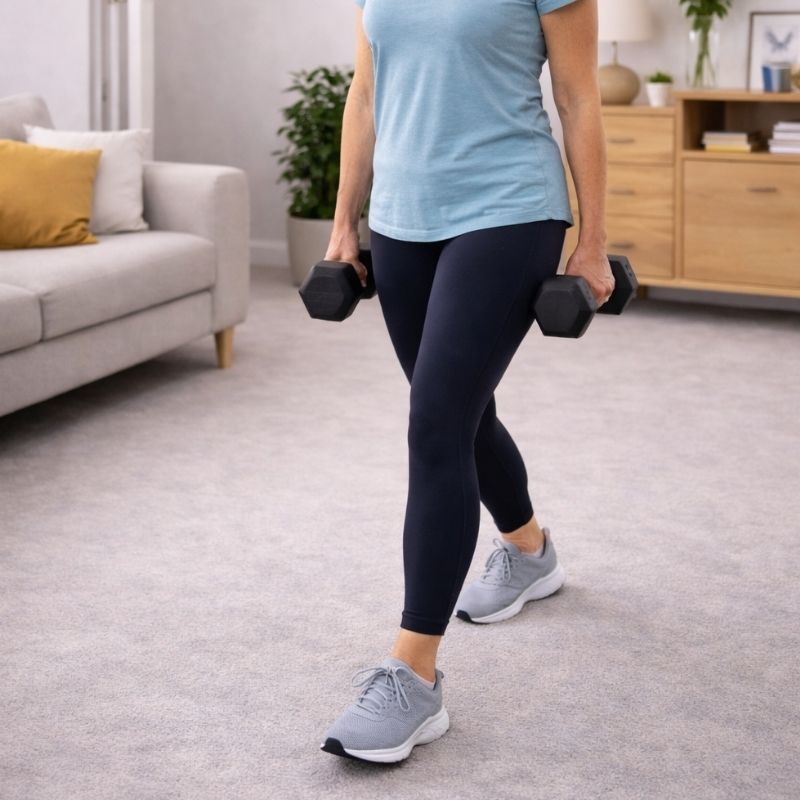
Carrying movements help build practical, full-body strength. They challenge your grip, shoulders and core, and support the kind of strength we use every day. Think about carrying shopping bags, luggage, laundry baskets or anything life hands you. That’s real-life strength - and it’s worth training.
You don’t need specialist equipment or heavy weights for this to be effective.
- Hold a weight in each hand (dumbbells, kettlebells or even shopping bags)
- Stand tall with your shoulders relaxed
- Keep your chest open and your stomach gently braced
- Walk forward in a controlled, steady way
- Turn carefully and walk back
That’s a farmer’s carry. Start light and focus on posture and control. The goal isn’t to rush - it’s to move steadily and stay upright. You don’t need long distances for this to be worthwhile. A good starting point is 20 to 30 seconds of walking, rest, and then repeat once or twice.
Find Out More
Learn how Active Teams boosts workplace health and performance using 'The Miracle Cure' of activity.
